
Wishing you a lovely Valentine's Day! Thank you for loyalty and support!



Wishing you a lovely Valentine's Day! Thank you for loyalty and support!
Outdoor adventure for seven is about to go farther off the beaten path than ever with the 2020 Toyota Sequoia TRD Pro, unveiled today at the Chicago Auto Show. With a chassis fortified by a TRD-tuned Fox shock absorber suspension, plus an array of proven off-road equipment specially designed or selected by Toyota Racing Development engineers, the full-size Sequoia TRD Pro offers room for the whole family and an affinity for thrills. The 2020 Sequoia joins a roster of TRD Pro vehicles that includes the Tacoma mid-size and Tundra full-size pickups and 4Runner SUV. Introduced in 2014, the TRD Pro lineup emerged from Toyota’s rich off-road racing heritage. The TRD Pro badge signifies a vehicle that’s capable of going where ordinary pickups and SUVs fear to tread, while still retaining the comfort for daily driving. With its robust body-on-frame construction, four-wheel independent suspension, generous ground clearance and powerful V8 engine, the Sequoia is already one of the most capable full-size SUVs on the market. The TRD Pro version comes standard with Multi-Mode 4WD, which is optional in other Sequoia grades. Fox Shocks: Ready for the Rough Stuff A preeminent maker of off-road suspension components, Fox has supplied off-road enthusiasts and racers with pavement-escaping options for decades. The aluminum-bodied internal bypass shocks employed on the 2020 Sequoia TRD Pro, and all TRD Pro models, are tuned by TRD engineers specifically for each truck or SUV’s unique attributes. Compared to external-bypass shocks used on off-road race vehicles, the Fox internal bypass shock compactly integrates bypass zones inside the shock body, which allows the shock’s fluid to bypass the piston through regulated ports as it moves through its travel. Providing a cushioned ride during typical driving, the Fox shock damping gets progressively firmer through the shock piston’s stroke to resist bottoming over rough trail surfaces. The tuning on each TRD Pro’s shocks is unique, and the front 2.5-inch Fox shocks on Sequoia include 7 compression zones and 2 rebound zones. TRD engineers reduced the front spring rate on Sequoia TRD Pro to improve its off-road compliance. The front shocks also provide an increase in rebound travel of 18mm. For the rear suspension, Sequoia TRD Pro employs 2-inch-diameter Fox piggyback monotube shocks that feature bottom-out-control technology, which is designed to increase damping force for improved bottoming resistance in unforgiving terrain. Compared to the standard rear Sequoia shocks, the 2-inch Fox units feature larger 47mm pistons (15mm larger than original equipment) and beefier shock rods that are 3.2 mm larger in diameter. The Fox shock bodies are constructed of fully anodized aluminum to help reduce weight while also efficiently dissipating heat to reduce shock fade during off-road driving. A combination of high-temperature damper fluid and pressurized nitrogen gas are employed inside each Fox shock to improve bump compliance and help maximize seal life. Standing Out on Dirt and Pavement One could never lose the 2020 Toyota Sequoia TRD Pro in the parking lot of an outdoor gear store. The TRD Pro “TOYOTA” grille leads the charge, flanked by LED headlights and, below, Rigid LED fog lights. The Sequoia TRD Pro rolls on TRD 18 x 8-in. black BBS forged aluminum wheels wearing P275/65 R18 tires. In addition to TRD Pro-exclusive Army Green, other exterior color choices include Super White, Midnight Black Metallic and Magnetic Gray Metallic. Whichever color is chosen, black TRD Pro front door badges quickly identify this special model. A TRD front skid plate helps protect the front suspension and oil pan during trail driving, while cast aluminum running boards and a roof rack enhance function, convenience and the adventurous attitude. Sequoia TRD Pro will also be available with a TRD cat-back exhaust. The single-outlet exhaust features a black chrome tip and TRD debossed logo, offering a bolder exhaust note that TRD engineers designed with a frequency-tuned sound cancellation device to improve in-cabin sound quality. The TRD Pro cabin treatment mixes ready-to-get-dirty function with luxury, because there’s nothing wrong with a little comfort out on the trail. Black TRD Pro leather-trimmed seats with red contrast stitching and “TRD Pro” stitched into the front headrests are comfortable and durable, while TRD Pro all-weather floor mats add bring-it-on cabin protection. Sequoia TRD Pro’s long roster of standard amenities include Smart Key with Push Button Start; 8-way power driver’s seat; power tilt/slide moonroof, and tri-zone automatic climate control with separate rear-seat controls. There’s no shortage of onboard music sources with the standard Premium Audio, which uses a high-resolution touchscreen display and includes Android Auto, Apple CarPlay, Amazon Alexa compatibility, AM/FM/HD Radio, SiriusXM® Satellite Radio, USB media port, plus Bluetooth hands-free phone capability and music streaming. Power to Spare Like all Sequoia models, the TRD Pro offers just one powertrain -- emphasis on power. The DOHC 5.7-liter i-FORCE V8, which uses regular-grade gasoline, produces 381 horsepower and 401 lb.-ft. of torque. It’s teamed with a 6-speed electronically controlled automatic transmission. Notably, the big V8 produces 90 percent of its peak torque at a low 2,200 rpm, a boon to towing. Compliant with the SAE J2807 towing standard, the Sequoia TRD Pro can tow up to 7,100 lbs. and features an integrated tow hitch, Driver-selectable Tow/Haul transmission mode and Trailer Sway Control. The standard Multi-Mode 4WD system uses a lockable TORSEN limited-slip center differential to apportion torque to the front and rear wheels, and a two-speed transfer case provides a low range ratio for tackling steep off-road trails. Low range is accessible on the fly via a rotary knob, while the center differential locks at the push of a button. Room for Adventure The 2020 Sequoia TRD Pro is available exclusively as a 7-seat model, featuring middle-row captain’s chairs and a three-across third-row seat with 60/40 split backs that also recline. And there’s plenty of room for all. Second-row legroom stretches 40.9 inches, while the third row offers adult-size 35.3 in. legroom. Carry lots of gear? The Sequoia TRD Pro can handle it. With both third-row seat backs folded flat, there’s 66.6 cu. ft. of carrying space, enough to haul camping gear for four. With the second-row seatbacks also folded, the space increases to a cavernous 120.1 cu. ft., enough for a really long camping trip. The Sequoia can even carry objects up to 11 feet long, provided the maximum weight is not exceeded. The liftgate has a versatile separate power window, with auto up/down and jam protection. Toyota Safety Sense-P Toyota Safety Sense P (TSS-P) is standard on every Sequoia grade. This advanced active safety suite bundles the Pre-Collision System with Pedestrian Detection and Automatic Braking, Lane Departure Alert with Sway Warning System, Dynamic Radar Cruise Control with full stop technology, plus Automatic High Beams. Sequoia gets even more safety with Standard Blind Spot Monitor and Rear Cross Traffic Alert. All Sequoia models are equipped with a dual-stage, advanced front air bag system, seat-mounted side airbags for the driver and front passenger, roll-sensing side curtain airbags for all three seating rows, plus driver and front passenger knee airbags. TRD Pro Upgrades All Around for 2020 The Sequoia TRD Pro leads a lot of “new” across the TRD Pro family for 2020. All TRD Pro models feature upgraded multimedia systems that include Android Auto, Apple CarPlay, and Amazon Alexa compatibility. The Tundra, Tacoma and 4Runner TRD Pros will all rely on an 8-inch touchscreen, while the Sequoia TRD Pro will feature a 7-inch touchscreen. In addition, all grades of 2020 Sequoia, Tundra, 4Runner and Tacoma will utilize this updated audio system, though screen size may vary between models. The Sequoia and Tundra CrewMax TRD Pro are upgraded to feature the top-level multimedia system with JBL Premium Audio and Navigation, a feature still standard in both 4Runner and Tacoma TRD Pros. Speaking of Tundra TRD Pro, for 2020 it will be offered in both Double Cab and CrewMax configurations. The Tacoma TRD Pro shows the world an even tougher stance with unique sequential LED/DRL headlamps and LED foglamps, along with a new 16-inch wheel design and black-insert taillamps. The driver gets a new 10-way power seat, and Smart key function is added to the passenger door. Toyota bolstered functionality for the 2020 Tacoma TRD Pro, as well. Ever wished you could have seen a trail obstacle before it was too late? The Tacoma TRD Pro shows the way – quite literally. New for 2020, Panoramic View Monitor (PVM) + Multi Terrain Monitor (MTM) provides selectable front, side, or rear views for around and under the vehicle. An available LED bed lamp offers brighter illumination. The 2020 4Runner TRD Pro is distinguished by a new grille design, as the lower section houses the radar sensor for Toyota Safety Sense-P (TSS-P), which is standard for all 4Runner grades for the 2020 model year. Just like Sequoia, Tundra and 4Runner TRD Pro models add Smart Key with Push Button Start for 2020, and the 4Runner also gains two additional rear-seat USB ports. Limited Warranty Toyota’s 36-month/36,000 mile basic new-vehicle warranty applies to all components other than normal wear and maintenance items. Additional 60-month warranties cover the powertrain for 60,000 miles and corrosion with no mileage limitation. Toyota dealers have complete details on the limited warranty. The Sequoia also comes standard with ToyotaCare, a complimentary plan covering normal factory-scheduled maintenance and 24-hour roadside assistance for two years or 25,000 miles, whichever comes first.
The all-new, fifth-generation Toyota RAV4, which launched just two months ago, is already looking ahead with the unveiling of the 2020 RAV4 TRD Off-Road model at the Chicago Auto Show. Arriving in the fall, the newest addition to the RAV4 family will be outfitted with a full array of special Toyota Racing Development engineering and design features for greater trail-driving capability and standout style. The vehicle that started the segment 22 years ago is now the best-selling non-pickup truck in the U.S. With the latest generation, it is bringing even more sport and more utility. For 2020, the new TRD Off-Road is designed for customers who make the great outdoors a second home. For the first time, the RAV4 will join a formidable team of Toyota TRD Off-Road SUVs and pickups inspired by the brand’s legendary off-road and desert racers. Beneath the new-generation RAV4’s bolder design, the Toyota New Global Architecture (TNGA-K) platform provides an ideal base for TRD’s renowned go-anywhere capability and style. Building on the 8.6-inch ground clearance and design features of the RAV4 Adventure grade, the 2020 RAV4 TRD Off-Road goes above and beyond with suspension, wheels and tires engineered specifically for trail driving. The Dynamic Force 2.5-liter, 203-horsepower four-cylinder engine, paired with an 8-speed Direct-Shift Automatic Transmission, provides get-up-and-go-anywhere performance and exemplary fuel efficiency. The driver can choose from Sport, Normal and Eco modes. To take more equipment along, such as personal watercraft, dirt bikes or a small enclosed trailer, the RAV4 TRD Off-Road is rated to tow up to 3,500 pounds. Standard Dynamic Torque Vectoring All-Wheel Drive can direct up to 50 percent of engine torque to the rear wheels, as well as distribute torque to the left or right rear wheel to enhance handling on or off pavement. When AWD isn’t needed, such as on long highway stretches, Rear Driveline Disconnect optimizes fuel economy. Using standard Multi-Terrain Select, the driver can maximize traction by matching the drive mode to the conditions -- Mud & Sand mode for beach driving, or Rock & Dirt mode for trails, and Snow for wintery conditions, for example. The Multi-Information Display (MID) shows torque allocation and slip control data. The new-generation RAV4’s short front and rear overhangs enhance trail-driving capability. In addition, the RAV4 TRD Off-Road will include Hill Start Assist Control (HAC), Trailer Sway Control (TSC), and Downhill Assist Control (DAC) for optimal on-road and off-road performance and safety. Thoroughly TRD The 2020 RAV4 TRD Off-Road takes cues from Toyota’s rich off-road racing history. It shares high-rise roof rails, large over-fenders, and aggressive bumper, grille designs and fog light surrounds with the RAV4 Adventure grade, but with a uniquely TRD personality. Inspired by TRD’s successful learnings with Ryan Millen’s Rally RAV4, TRD Off-Road suspension is engineered to enhance body control and small-bump isolation to help smooth out trails and rough city streets. Unique red coil springs are tuned for an off-road focus. The twin-tube shocks are re-valved and feature new internal rebound springs to improve rebound control. New bump stops maximize compression direction wheel travel and help improve body control over large bumps and dips. The 2020 RAV4 TRD Off-Road exclusively rolls on lighter and more rigid flow-formed 18x7-inch matte black TRD alloy wheels with Falken Wildpeak A/T Trail all-terrain tires. These all-terrain tires mean business, with a unique tread pattern and compound developed to TRD technical requirements. A rugged square shoulder design helps protect against punctures, on or off road, and the tires are Severe Snow Rated with open shoulder grooving to shed debris, mud and snow. Available in an exclusive two-tone Magnetic Gray Metallic w/Ice Edge Roof combination, the RAV4 TRD Off-Road is accented by dark gray front and rear lower fascias, and front LED fog lights are standard. TRD Off-Road is also available in Midnight Black or Lunar Rock, both of which are available with optional Ice Edge Roof. Other available colors include Ruby Flare Pearl and Super White. Inside, striking red stitching and red trim accent the cabin. Seat surfaces are covered in comfortable SofTex, which is lighter than leather yet highly durable, and the front seats have “TRD” stitched into the headrests. Exclusive TRD all-weather floor mats and rear cargo mat capture the mud, sand and water dragged in from the outside and easily shake out for cleanup. Next-Generation Toyota Safety Sense (TSS 2.0) Toyota Safety Sense (TSS 2.0), which is already standard on all 2019 RAV4 models, includes a long roster of active-safety technologies and capabilities: • Pre-Collision System with Pedestrian Detection (PCS w/PD) • Full-Speed Range Dynamic Radar Cruise Control (DRCC) • Lane Departure Alert with Steering Assist (LDA w/SA) • Automatic High Beam (AHB) • Lane Tracing Assist (LTA) • Road Sign Assist (RSA) Blind Spot Monitor (BSM) with Rear Cross Traffic Alert (RCTA) and Rear Cross Traffic Braking (RCTB) system will also be standard on the 2020 RAV4 TRD Off-Road. Limited Warranty and ToyotaCare The 36-month/36,000-mile basic new-vehicle warranty applies to all components other than normal wear and maintenance items. Additional 60-month warranties cover the powertrain for 60,000 miles and corrosion with no mileage limitation. Toyota dealers have complete details on the limited warranty. RAV4 also comes standard with ToyotaCare, a complimentary plan covering normal factory-scheduled maintenance and 24-hour roadside assistance for two years or 25,000 miles, whichever comes first.

2019 RAV4 $1,000 APR Finance Cash 2019 Highlander $2,000 Total Cash Allowance Click here for inventory.
At the 2019 Chicago Auto Show, visitors will experience Toyota’s full vehicle lineup of cars, trucks and SUVs, including the 2020 GR Supra, which made its world debut in Detroit last month. The 2020 Tacoma, 2020 Land Cruiser Heritage Edition, 2019 RAV4, 2019 Prius AWD-e and Tundra PIE Pro will be amongst the vehicles in the 44,980 square-foot display, along with technology demonstrations and special guest appearances. The Chicago Auto Show takes place February 9-18 at McCormick Place. Tacom-ing soon! For more information on the 2020 Toyota Tacoma, fans can tune in to the Toyota Press Conference at 10 a.m. CST, Thursday, February 7 here: https://livestream.com/Toyota/CAS2019 Following its Detroit debut, the 2020 GR Supra will make its first appearance in Chicago. More than 20 years in the making, the 2020 GR Supra is the first global Toyota GAZOO Racing model with design inspired by Calty’s FT-1 Concept. The Supra goes on sale this summer and the first 1,500 vehicles will be Launch Edition models. The new Supra will feature an exhilarating blend of power, precision and agility thanks to a rear wheel design with a low center of gravity and optimal weight balance. The 2020 model will be powered by a turbocharged inline six-cylinder engine and its 3.0-liter twin-scroll turbo six will produce 335 hp and 365 lb.-ft. of torque and will be teamed with a quick-shifting 8-speed automatic transmission with paddle shifters. The 2020 Land Cruiser Heritage Edition melds exclusive design with added function, honoring the iconic vehicle’s adventurous 60+ year history. The limited-edition vehicle features exclusive exterior and interior trim, a vintage-style Land Cruiser exterior badge and special bronze-colored, forged-aluminum BBS wheels with a “Toyota” center cap. Blending luxury with capability, the new vehicle has a 381 horsepower 5.7-liter DOHC V8 engine, 8-speed transmission, full capability 4-wheel drive with advanced chassis control. Standard features will include Downhill Assist Control, Hill Start Assist, CRAWL Control and Off-Road Turn Assist. only be a limited number of Heritage Editions available when it goes on sale in the summer of 2019. Now in its fifth generation, the 2019 RAV4 features an entirely reimagined design, enhanced performance and fuel efficiency thanks to the implementation of the Toyota New Global Architecture (TNGA) platform and two new powertrains. From multimedia technology to smarter all-wheel drive and a more efficient hybrid powertrain, the Toyota RAV4 is brimming with high-tech that works seamlessly and conveniently to deliver a rewarding driving and ownership experience. Every 2019 RAV4 model is equipped with Amazon Alexa and Google Assistant capability and Entune 3.0 Audio. Boasting an estimated 52 mpg in the city, the new Prius AWD-e is one of the most fuel-efficient AWD-equipped vehicles in America, now allowing for more adventures outside of the city. The new AWD-e system (“e” stands for electric), provides additional traction in certain conditions including inclement weather, snow or rain, giving drivers the confidence to expand their horizons. While Toyota won’t pick a side in the deep-dish debate, the Tundra PIE Pro features technology to bake pizzas from the bed of the truck. The concept vehicle is powered by a hydrogen fuel cell electric powertrain from a Toyota Mirai, resulting in a zero-emission mobile pizza factory. In the bed of the truck, a totally-contained pizza kitchen includes a refrigerator, a pair of computer-guided articulating robotic arms and a portable, high-efficiency conveyor oven that can bake a pizza from start to finish in seven minutes. Additional vehicles on display include the 2019 Avalon Hybrid, 2020 Corolla and Corolla Hybrid and the TJ Cruiser, a new crossover concept vehicle that combines the roominess of a cargo van with the functionality of an SUV to seamlessly integrate work with life.
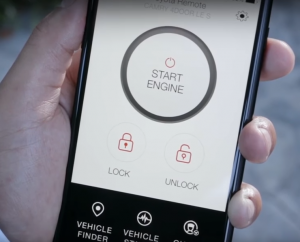
Toyota Entune(TM) 3.0 multimedia system's Remote Connect feature allows you to access select vehicle capabilities from your mobile device. Lock and Unlock doors, start and stop engine, finding and monitoring vehicle status is all possible through the Toyota Remote Connect app. Watch to learn more. Pandora®, OpenTable®, and Facebook Places are no longer available in Entune™ App Suite as these products and services are no longer supported by the third-party application providers. Always drive safely and obey traffic laws. Apps, prices and services vary by phone carrier and are subject to change at any time without notice. Subject to smartphone connectivity and capability. Data charges may apply.
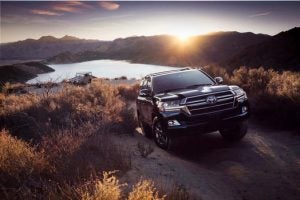
Six decades and millions of adventurous miles in the making, the 2020 Toyota Land Cruiser Heritage Edition melds exclusive design with added function for its debut just ahead of the Chicago Auto Show, where it will be shown to the public for the first time. The Land Cruiser Heritage Edition honors this legendary vehicle’s continuous evolution, from bare-bones, mountain-climbing 4x4 to world-renowned, full-capability premium-luxury utility vehicle. The Heritage Edition also celebrates the Land Cruiser’s continuous place in Toyota’s U.S. lineup since 1958. For the 2020 model year there will be 1,200 Heritage Editions available, with units going on in late summer of 2019. Pricing will be announced closer to on-sale date. The 2020 Land Cruiser Heritage Edition, only offered as a two-row model to maximize cargo capacity, is dressed elegantly for the occasion. The choice of Midnight Black Metallic or Blizzard Pearl exterior color is uniquely styled with a black-accented grille and bronze-colored BBS 18 x 8.0-inch forged aluminum wheels featuring a “TOYOTA” center cap. A vintage-style Land Cruiser exterior badge evokes the vehicle’s long, accomplished history in an understated way. To complement its purpose-built overlanding focus, the running boards and chrome lower body side moldings of the standard Land Cruiser are deleted, while darkened headlight housings, fog lights with dark chrome surrounds and side mirrors with darkened chrome details underscore the vehicle’s sophisticated presence. Highlighting the Land Cruiser’s renown for blending luxury with capability, the Heritage Edition is exclusively outfitted with black leather-trimmed upholstery. The bronze wheel color carries inside for the contrast stitching used throughout the cabin, including the steering wheel, door trim, center stack, console and seats. Finally, the Land Cruiser Heritage Edition features all-weather floor mats and cargo liner, so it’s ready to get out and have fun. V8, 4WD Powerhouse The Toyota Land Cruiser remains a benchmark for combining no-compromise capability with coddling luxury. Its sole available powertrain is a brawny yet refined 381-horsepower 5.7-liter DOHC V8 engine, which produces 401 lb.-ft. of torque. The 8-speed Electronically Controlled Automatic Transmission with intelligence (ECT-i) teams with a versatile full-time 4WD system, which uses a TORSEN limited-slip locking center differential and a 2-speed transfer case with selectable low-range. Land Cruiser’s off-road capability is rooted in high-strength body-on-frame construction and sophisticated double-wishbone front and four-link coil-spring rear suspension. Kinetic Dynamic Suspension System (KDSS) hydraulically adjusts the stabilizer bars to enhance on-road smoothness and off-road wheel articulation. Off-road prowess is supported by a plethora of advanced assist technologies, including Downhill Assist Control, Hill Start Assist, CRAWL Control, and Off-Road Turn Assist. Using the Multi-Terrain Select system, the driver can match wheel slip control to the surface and driving conditions. Skid plates help to protect the front suspension, radiator, fuel tank, and transfer case, and Multi-Terrain Monitor provides nearly 360-degree visibility on tight trails. Equipped with a standard Trailer Towing Package, the Land Cruiser can pull a trailer up to 8,100 pounds. Roughing It in Luxury The 2020 Heritage Edition features Land Cruiser’s full complement of amenities, including ventilated front seats, heated steering wheel with power tilt and telescoping and memory, power moonroof, four-zone automatic climate control with 28 cabin air vents, and Smart Key keyless entry with push-button start. For additional storage options, the Heritage Edition removes the cool box in the center console of the front seat. A 9-inch touchscreen infotainment system features standard Premium JBL® Audio with Integrated Navigation, 14 JBL speakers, split-screen capability, advanced voice recognition, Siri® Eyes Free mode, SiriusXM® Satellite Radio, Bluetooth® connectivity and music streaming, and Qi wireless phone charging with compatible phones. Toyota Safety Connect (with three years of complimentary service) uses onboard cellular technology, independent of the driver’s phone, to provide such services as Automatic Collision Notification, Stolen Vehicle Location, Emergency Assistance Button (SOS), and GPS-enhanced Roadside Assistance. All Land Cruiser models come standard with Toyota Safety Sense P (TSS-P). Using millimeter-wave radar and a monocular camera sensor to detect a preceding pedestrian or a preceding vehicle, TSS-P Pre-Collision System is designed to automatically apply braking if necessary to help mitigate or avoid collisions in certain conditions. The system includes Lane Departure Alert with Sway Warning System, Dynamic Radar Cruise Control, and Automatic High Beams. In addition to TSS-P, Blind Spot Monitor and Rear Cross Traffic Alert are also standard. Land Cruiser Heritage The Land Cruiser traces its origins to the 1951 BJ, Toyota’s bid to produce a small 4WD military vehicle. It was not chosen but went on to become the first motor vehicle to reach the sixth station on the trail to the top of Mt. Fuji. The BJ became the Land Cruiser in 1954, and an updated model, the 20-Series, was one of the first Toyota exports to the United States in 1958. The next Land Cruiser iteration, the 40-Series (a.k.a. FJ-40), arrived in 1960 and became an all-terrain icon (and now a collector’s item). A larger station wagon model followed in the late-1960s, putting the Land Cruiser on a path toward family adventures. By 1991, the 80-Series Land Cruiser was well on its way to becoming a full premium model. The 100-Series codified that direction in the late-1990s with a V8 engine and full array of advanced chassis systems and luxury amenities. The current Land Cruiser, known internally as the 200-Series, is the most advanced and luxurious in the model’s history. Limited Warranty and ToyotaCare The 36-month/36,000-mile basic new-vehicle warranty applies to all components other than normal wear and maintenance items. Additional 60-month warranties cover the powertrain for 60,000 miles and corrosion with no mileage limitation. Toyota dealers have complete details on the limited warranty.
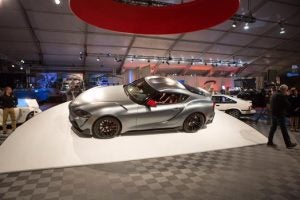
The first production 2020 Toyota GR Supra to roll off the assembly line, “Global #1,” was auctioned for charity this evening for $2.1 million at the 48th Annual Barrett-Jackson Auction at WestWorld of Scottsdale. All proceeds of the fifth-generation GR Supra, which made its world debut on January 14, 2019 during the 2019 North American International Auto Show in Detroit, went to support the American Heart Association(AHA) and the Bob Woodruff Foundation (BWF). “We did the first production 2020 GR Supra justice tonight at Barrett-Jackson,” said Bob Carter, executive vice president of sales, Toyota Motor North America. “When Toyota launches a vehicle of this caliber, you only get one chance to do it right – and this auction was the perfect setting. After 20 years, this marks the return of a legend. Sportscar enthusiasts have been dreaming to slide behind the wheel of an all-new Supra – and we’re happy to be a part of turning that dream into a reality.” A build unlike any other in the world, “Global #1” is the only VIN that will end in 20201 – with “2020” representing the year the Supra was reintroduced to the world and “1” marking it as the first vehicle to roll off the production line. The exterior is factory-finished with a matte gray exterior, red mirror caps and matte black wheels. Inside, the Supra is just as unique, with a red interior and carbon-fiber inserts representing the first of the launch edition for the U.S. market. “It was an honor to have Bob Carter and the rest of the Toyota team join us on the block for the historic sale of the first production 2020 Toyota Supra,” said Craig Jackson, chairman and CEO of Barrett-Jackson. “The incredible excitement of the Supra rolling across the block was felt by everyone in the arena. This was a moment that was 20 years in the making. More importantly, we’re thrilled to have joined with Toyota in their efforts to raise funds in the fight against heart disease and stroke, as well as support our nation’s military veterans." The sale of the Supra supports the American Heart Association (AHA), the nation’s oldest and largest voluntary organization dedicated to fighting heart disease and stroke, and the Bob Woodruff Foundation (BWF), which finds, funds and shape programs benefitting post-9/11 impacted veterans and their families. “Toyota knows acceleration, so it’s no surprise their generous support is helping accelerate science to end heart disease and stroke, the world’s No. 1 and No. 2 killers worldwide,“ said American Heart Association CEO Nancy Brown. “The American Heart Association is honored to partner with Toyota to create healthier communities and empower people to be in the driver’s seat of their health.” Auction proceeds also support BWF’s programs for veterans, service members and their families BWF, founded in 2006 after reporter Bob Woodruff was hit by a roadside bomb while covering the war in Iraq, has led an enduring call to action for people to stand up for heroes and meet the emerging and long-term needs of today’s veterans. “As our nation’s veterans return home, the Bob Woodruff Foundation helps ensure that those who are impacted by their service are supported by best-in-class programs addressing their current and long-term needs,” said Anne Marie Dougherty, CEO of the Bob Woodruff Foundation. “Our mission is made possible by the enduring commitment and generosity of our partners at Toyota, and we’re grateful to be part of their vision for a better tomorrow.” The winning bidder also received a full VIP race track experience that includes a fully customized professional racing suit, two VIP passes and hot passes to TOYOTA OWNERS 400 - Richmond Raceway and a chance to drive the pace car and do hot laps with Michael Waltrip.
In honor of the life and vision of Dr. Martin Luther King, Jr., Toyota Financial Services and Toyota Motor North America are continuing their support of Historically Black Colleges and Universities (HBCUs) and their communities, by providing a total contribution of $60,000 to five HBCUs as well as the Tom Joyner Foundation. This is the company’s fifth consecutive year partnering with the Tom Joyner Foundation, and supporting HBCUs through this donation. Toyota’s contribution will be used to help boost college retention and graduation rates for African-American students, and is in keeping with the company’s deep commitment to diversity and inclusion, as well as mobility for all. Over the past five years, this initiative has enabled Toyota to assist students who may have otherwise been unable to complete their education due to the lack of financial aid. The following universities will each receive $10,000: Spelman College (Atlanta, GA) Jackson State University (Jackson, MS) Talladega College (Talladega, AL) Claflin University (Orangeburg, SC) Virginia State University (Petersburg, VA) An additional $10,000 will go to support the work of the Tom Joyner Foundation, which provides academic support, scholarships, and programming to over 80 HBCUs in the Southern and Eastern United States. As of 2018, the college graduation rate for African-American students in the U.S. stands at 42%. (1) It is noted that the financial support of universities is key in black student retention, thereby producing high graduation rates. “Dr. King believed all young people should be given an opportunity to receive the best education possible, and yet, I have personally witnessed promising, young students forced to withdraw from school as a result of financial burdens,” said John Ridgeway, general manager of Toyota Financial Services’ Customer Service Center in Maryland, and HBCU alumnus. “Through its contributions, Toyota hopes to help ensure students achieve their dreams of higher education, while also contributing to the sustainment of these HBCUs and their ability to address retention issues.” Tom Joyner, founder and chairman of the Tom Joyner Foundation, said these scholarships really do make a difference. “I appreciate Toyota Financial Services for lending their support to these scholars – and these HBCUs,” said Joyner, whose popular syndicated Tom Joyner Morning Show reaches millions of listeners every morning around the country. “Without these scholarships, some of these students wouldn’t have a chance to get a college degree and contribute to their communities in so many ways.” “Toyota is dedicated to enabling mobility. We want to help people get where they want to be, and that doesn’t just mean physically – it also means socially, economically, and aspirationally,” said Mark Templin, Toyota Financial Services President and CEO. “We’re honored to support HBCUs, and to help remove some of the financial obstacles that hinder students from achieving their dreams.” Toyota has been named a DiversityInc Top 50 company for the past 10 years, and has been consistently recognized by Black Enterprise, Hispanic Business, and the Human Rights Campaign as a Best Company for Diversity and one of the Best Places to Work. Toyota has provided millions of dollars in scholarships to deserving students across the nation; its executives actively support and sponsor the company’s many diversity and inclusion initiatives, and its team members volunteer tens of thousands of hours of their time and provide their talents to national- and community-based programs across the United States. “Over 27 percent of my senior leaders at our Customer Service Center in Maryland and 35 of my own family members graduated from an HBCU, so I am particularly proud that Toyota is once again making a contribution to these schools and the Tom Joyner Foundation,” added Ridgeway. “It serves as a great way to honor the legacy of Dr. King, and the principles he so effectively championed.” For more information, contact Neil Foote, media relations, Tom Joyner Foundation (neil.foote@tomjoynerfoundation.org, 214.448.3765) or Justin Leach, public relations manager, Toyota Financial Services (justin.leach@toyota.com, 469.486.9065). For more information about Toyota's commitment to diversity and inclusion, please visit www.toyota.com/diversity. 1 According to the Economic Policy Institute, 2018
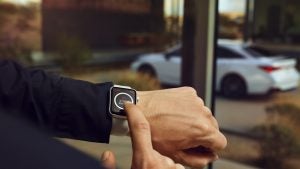
Tech + Connectivity With an available 1200-watt JBL® Audio system, Entune™ 3.0, Apple CarPlay™, as well as Apple Watch® and available Android™ smartwatch compatibility, Avalon offers a wealth of technology that keeps up with you. Click here to learn more.

Lease the 2019 Toyota RAV4 for only $219 per month for 36 months. Click here to view inventory. Offer Expires 2/5/2019 LOW MILEAGE 36 MONTH LEASE. TAX, TITLE, LICENSE, DEALER PROCESSING FEE OF $300 (NOT REQUIRED BY LAW) AND INSURANCE ARE EXTRA. DUE AT SIGNING INCLUDES $3,830 DOWN, FIRST $219 PAYMENT, AND NO SECURITY DEPOSIT. DOES NOT INCLUDE $350 DISPOSITION FEE DUE AT LEASE END. EXAMPLE BASED ON 2019 RAV4 LE FRONT WHEEL DRIVE MODEL 4430, MSRP $26,635 AND CAPITALIZED COST, WHICH MAY VARY BY DEALER, OF $26,216. CAPITALIZED COST IN EXAMPLE INCLUDES $650 ACQUISITION FEE AND ASSUMES DEALER PARTICIPATION. YOUR PAYMENT TERMS MAY VARY BASED ON FINAL NEGOTIATED PRICE. OFFER AVAILABLE ON APPROVED CREDIT TO QUALIFIED CUSTOMERS FROM TOYOTA FINANCIAL SERVICES. CUSTOMER IS RESPONSIBLE FOR EXCESSIVE WEAR AND EXCESS MILEAGE CHARGES OF $.15 PER MILE IN EXCESS OF 30,000 MILES. NOT ALL CUSTOMERS WILL QUALIFY. OFFER MAY NOT BE COMBINED WITH OTHER OFFERS UNLESS SPECIFIED OTHERWISE. DEALER PROCESSING FEE OF $300 (NOT REQUIRED BY LAW). VEHICLE SHOWN MAY BE PROTOTYPE AND/OR SHOWN WITH OPTIONS. ACTUAL MODEL MAY VARY. DELIVERY MUST BE TAKEN FROM DEALER STOCK BY 2/4/19 AND IS SUBJECT TO AVAILABILITY.
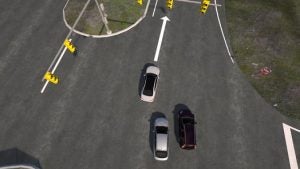
Toyota is doubling-down on humans. That’s the answer to the question; What has the Toyota Research Institute (TRI) been doing in automated driving over the past 12 months? Using onboard cameras, sensors and 3D animation, TRI opened its portion of a press conference today at the annual CES show in Las Vegas with a vivid reenactment of a three-car crash on a California interstate, where no one was injured. “We know what happened because we were there, in the thick of it,” said Dr. Gill Pratt, TRI CEO and Toyota Motor Corporation Fellow. “Our test vehicle was travelling at freeway speed in manual mode with its autonomy mode disabled as it gathered data at the many tunnels and bridges in the San Francisco bay area. As we downloaded data from the incident, we asked ourselves; Could this crash have been mitigated, or avoided altogether by a future Toyota Guardian automated safety system? We believe the answer is yes.” From its beginning three years ago, TRI has been committed to a two-track development approach to automated driving. Its on-going Chauffeur development focuses on full autonomy, where the human is essentially removed from the driving equation, either completely in all environments, or within a restricted operational design domain (ODD). Toyota Guardian, on the other hand, is being developed to amplify human control of the vehicle, not replace it. With Toyota Guardian, the driver is meant to be in control of the car at all times, except in those cases where it anticipates or identifies a pending incident and employs a corrective response in coordination with driver input. One of TRI’s most significant breakthroughs this year, was the creation of blended envelope control where Guardian combines and coordinates the skills and strengths of the human and the machine. The system was inspired and informed by the way that modern fighter jets are flown, where you have a pilot that flies the stick, but actually they don't fly the plane directly. Instead, their intent is translated by the low-level flight control system, thousands of times a second to stabilize the aircraft and stay within a specific safety envelope This blended envelope control is much more difficult to create in a car than in a fighter jet. That is because the control envelope for a car is not only defined by vehicle dynamics, but also by the vehicle’s perception and prediction ability of all things in its immediate environment. The big idea is that this control envelope is not a discrete on-off switch between the human and the autonomy. It's really a near-seamless blend of both, working as teammates to extract the best input from each. Guardian is being developed as an automated safety system, capable of operating with either a human driver, or an autonomous driving system, provided by Toyota, or any other company. This is a key capability. As Akio Toyoda announced at CES last year, Toyota plans to include Toyota Guardian as standard equipment on all Toyota e-Palette platforms that the company will build for the MaaS---Mobility as a Service--- market. By doing so, MaaS fleet buyers can use any autonomous system they choose, with Toyota Guardian acting as a belt-and-suspender redundancy for any self-driving Chauffeur system. Pratt stressed the importance of not underestimating the difficulty of developing an autonomous Chauffeur system, both technologically and sociologically. Technically, how do we train a machine about the social ballet required to navigate through an ever-changing environment, as well as, or better than, a human driver? Sociologically, public acceptance of the inevitable crashes, injuries, and deaths that will occur due to fully autonomous Chauffeur systems may take considerable time. “In the meantime,” stated Pratt, “we have a moral obligation to apply automated vehicle technology to save as many lives as possible as soon as possible.” That is why TRI’s primary focus last year has been to concentrate most of its effort on making Toyota Guardian a smarter machine. For Guardian to learn and get smarter, it must be subjected to difficult and demanding driving scenarios, “corner cases” that are simply too dangerous to perform on public roads. On closed courses, Guardian’s intelligence and capabilities can be stretched and challenged. Through continuous refinement, Guardian learns how best to navigate and react to extremely dangerous scenarios, as they unfold. This growing Guardian capability gives the three-car incident in California shown during the opening press conference sequence, an interesting lemons-to-lemonade twist. Here was an accidental corner case on a public highway; a dangerous crash that unfolded right before Guardian’s sensors and cameras. From that data, TRI developed an accurate simulation which was then translated into a learning tool for the car to figure out its options in a split-second. The scenario was then re-created on the test track, using real vehicles and a guided, soft-target, dummy-vehicle. In this instance, Guardian’s best option was to quickly accelerate for daylight and away from encroaching vehicles. Here is a case where Guardian might avoid, or mitigate a collision for itself, while potentially doing the same for other nearby vehicles; in a way, an Altruistic Guardian. Pratt addressed another key capability that makes Toyota Guardian even more evocative. “We humans have an inherent need for autonomy, which is much stronger than our desire for autonomous cars,” said Pratt. “It’s about the sheer delight of mobility when a child first learns to stand-up and giggle its way across a room without the help of mom or dad. And it is the joy of just going for a drive, behind the wheel of a car that can accelerate, brake and turn as if an extension of your body.” The joy of driving is an inherent and deliberate component of Guardian. Hands-on-the-wheel and eyes-on-the-road is first-and-foremost about safety. But it is not ALL about safety. It is also about how a driver feels behind the wheel; safe and secure to enjoy the drive, instead of the ride. And, it’s about the democratization of safety, a philosophy Toyota and Lexus pioneered nearly three years ago, when it began providing automatic emergency braking as standard equipment in nearly every model and trim level sold in the US. “We think the most important benefit of automated driving, is not about the autonomy of cars,” concluded Pratt, “but about the safety and autonomy of people.”