Blog

All Passport Toyota News New Vehicles New Toyota Cars For Sale Suitland Toyota Dealer Suitland New Toyota Cars For Sale Suitland Toyota Service Car Maintenance Tips Community Suitland Used Cars Toyota Information Travel Destinations Vehicle Safety Tips Travel Safety Tips

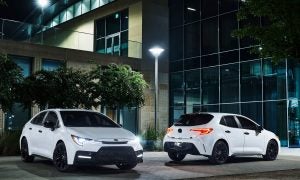
Drive a new Toyota Corolla for only $149 per month from Passport Toyota

Lease the 2020 Toyota Corolla for only $149 per month. Click here to view our inventory. 36 MONTH LEASE. LOW MILEAGE LEASE. TAX, TITLE, LICENSE, DEALER PROCESSING FEE OF $300 (NOT REQUIRED BY LAW) AND INSURANCE ARE EXTRA. DUE AT SIGNING INCLUDES $3,900 DOWN, FIRST $149 PAYMENT, AND NO SECURITY DEPOSIT. DOES NOT INCLUDE $350 DISPOSITION FEE DUE AT LEASE END. EXAMPLE BASED ON 2020 COROLLA 4 CYLINDER AUTOMATIC MODEL 1852, MSRP $20,880 AND CAPITALIZED COST, WHICH MAY VARY BY DEALER, OF $20,618. CAPITALIZED COST IN EXAMPLE INCLUDES $650 ACQUISITION FEE AND ASSUMES DEALER PARTICIPATION. YOUR PAYMENT TERMS MAY VARY BASED ON FINAL NEGOTIATED PRICE. OFFER AVAILABLE ON APPROVED CREDIT TO QUALIFIED CUSTOMERS FROM TOYOTA FINANCIAL SERVICES. CUSTOMER IS RESPONSIBLE FOR EXCESSIVE WEAR AND EXCESS MILEAGE CHARGES OF $.15 PER MILE IN EXCESS OF 30,000 MILES. NOT ALL CUSTOMERS WILL QUALIFY. OFFER MAY NOT BE COMBINED WITH OTHER OFFERS UNLESS SPECIFIED OTHERWISE. DEALER PROCESSING FEE OF $300 (NOT REQUIRED BY LAW). VEHICLE SHOWN MAY BE PROTOTYPE AND/OR SHOWN WITH OPTIONS. ACTUAL MODEL MAY VARY. DELIVERY MUST BE TAKEN FROM DEALER STOCK BY 9/3/19 AND IS SUBJECT TO AVAILABILITY.

Take a look at the 5 Toyota SUVs with Third-Row Seating

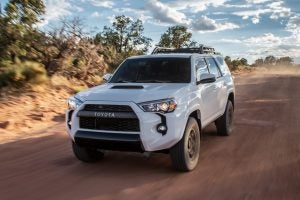
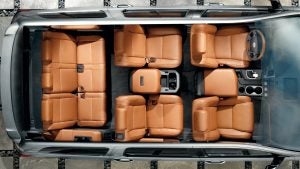
An extra row of seating can go a long way. Toyota SUVs with third-row seating offer ample interior and cargo space to get your whole crew where they need to go, from after-school activities to weekend road trips. Discover which Toyota three-row SUV boasts exceptional cargo space and impressive performance. Plus, learn more about smaller SUV options with available third-row seating to find the perfect Toyota model for your lifestyle. Expect versatility and innovative design to help you and your weekend warriors conquer the road ahead in a Toyota SUV with third-row seating. more Highlander Versatile interior space options include seating for up to eight, ample cargo space, and five USB ports in this Toyota SUV with third-row seating. Highlander Hybrid With up to an EPA-estimated 30 city MPG and advanced Toyota Safety Sense™ (TSS) features, expect technology and efficiency from this SUV with third-row seating. 4Runner Conquer challenging terrain in this SUV with third-row seating available. Plus, the available sliding rear cargo deck offers easy access without sacrificing comfort. Sequoia A powerful 5.7L V8 engine, available Multi-Mode 4WD system, and impressive towing capabilities help keep your adventure rolling in this spacious SUV with third-row seating Land Cruiser Exceptional performance plus 8-passenger seating help keep your whole crew connected without sacrificing comfort or style. Build and price this Toyota three-row SUV and explore its roomy interior now. Click here to view our 3rd row seating inventory.

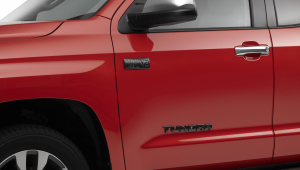
Toyota’s full-size truck turns the big 2-0 this summer. We count down six of Tundra’s most interesting moments yet.

The Tundra was the first-ever full-size pickup truck built by a Japanese automaker in North America. Production began in May 1999 at Toyota Motor Manufacturing, Indiana (TMMI), before moving to the Toyota Motor Manufacturing, Texas (TMMTX) plant in San Antonio in 2008. It’s still assembled there today and remains the only full-size pickup truck made in Texas. Humble Beginnings When announcing the Tundra to the world in 1998, Toyota stayed true to the truck’s Indiana roots: It was unveiled at the Indiana State Fair. “Today marks the beginning of the launch of one of the most important vehicles ever introduced in the 41 years we’ve sold cars and trucks here in America,” said Don Esmond, who at the time served as Toyota Motor Sales group vice president and general manager, Toyota Division. “It needed to be built in America because it needed to offer better value.” more Making History When production began 20 years ago, Tundra pushed boundaries and raised expectations for what full-size pickup trucks could do. Under the hood, it had the most sophisticated power-plant ever offered in its class, including the first double-overhead cam, 32-valve V8 in the segment. It was also the first V8 engine to achieve an L.E.V (low emission vehicle) emissions classification from the EPA. Its engine provided the strength to haul a maximum payload of nearly one ton, and pull a maximum towing capacity of 7,200 pounds depending on the model and level of equipment. Out of this World Of course, that all came in handy several years later – when the space shuttle Endeavour needed a ride across the nation’s busiest freeway. In 2012, a stock Tundra CrewMax 4×4 with no special modifications towed the Endeavour and a custom-built dolly across a bridge spanning the 405. The setup weighed 292,000 pounds and took about five minutes. The trip was part of the shuttle’s 12-mile journey from Los Angeles International Airport to the California Science Center. A Million Miles and Counting Tundras are built to last. Just ask Victor Sheppard. His 2007 Tundra was among the first of its kind manufactured at TMMTX, and he averaged about 125,000 miles of driving each year. By 2016, it had more than a million miles on the odometer. When Toyota learned of the milestone, they offered Sheppard a new Tundra in exchange for his old one – so engineers could get a look under the hood and learn how the vehicle had held up after so many miles. Read more about what they found here. Through the Flames In 2018, a heroic ICU nurse ferried several people to safety through a deadly California wildfire in his Tundra. Allyn Pierce had safely evacuated the Camp Fire – the deadliest wildfire in the state’s history – when he got word that patients and coworkers were trapped at the hospital where he worked. Pierce immediately turned his truck around – eventually making multiple round trips to get as many people out as possible. His Tundra survived too, although it suffered significant body damage. Toyota replaced Pierce’s Tundra as a thank you for his life-saving heroism. Read more about the rescues here.

How does the Tire Pressure Monitoring System work on a Toyota?

If the Tire Pressure Monitor System senses seriously low pressure in one of your tires, the low tire pressure icon will appear in the instrument display and you'll see a warning message in the Multi-Information Display. If the indicator light stays on, check all the tires and refill, repair or replace any that are below the proper pressure. Rotating tires, changing tire pressures, or switching tire sizes could trigger the warning. To reset the system, first make sure the tire pressures are correct. Turn the engine on, then press and hold the reset button. You'll find it low and to the right of the steering wheel on the instrument panel. Hold the button down until the TPMS indicator light in the instrument panel blinks slowly 3 three times. Wait for several minutes with the engine running, to allow the system to record each tire's pressure, then turn the engine off. more If the light comes on and blinks when you start the car, something may not be working properly, and you should take it to Passport Toyota to be inspected. If you replace one of the original wheels or pressure sensors, you'll need to have a Toyota dealership register it. Disclaimer: The Toyota Tire Pressure Monitor alerts the driver when tire pressure is critically low. For optimal tire wear and performance, tire pressure should be checked regularly with a gauge; do not rely solely on the monitor system. See your Owner's Manual for details. Not all features are available on all vehicles and model grades. Please see your Owner's Manual for further details and important safety information.

Toyota to Reduce Emissions from North American Operations by up to Forty Percent

Toyota Motor North America (TMNA) is committing to aggressively reduce its carbon output in the United States by entering into Virtual Power Purchase Agreements (VPPAs). It will use them to reduce emissions from its North American operations by up to forty percent over the next 3 years. The move represents another major step towards Toyota’s Environmental Challenge 2050 goal of cutting global emissions from plant operations to zero globally by the year 2050. Under the VPPAs, which the company expects to commence later this year, TMNA will contract with renewable energy providers to generate wind and solar power that will be provided directly to regional electric grids. The supply of renewable power is expected to reduce use of fossil fuels while improving the sustainability of the electric grid in the area. By powering its operations from the enhanced grid and applying Renewable Energy Credits earned by funding the generation of renewable electricity, Toyota expects to substantially offset emissions from its facilities in North America. more “Toyota has long been defined by its commitment to responsible environmental practices, and we’re proud to build upon that great legacy today,” said Kevin Butt, General Manager and Regional Environmental Sustainability Director for Toyota Motor North America. “We are committed to setting an example of sustainability that goes beyond vehicles to show how a company can significantly reduce the environmental impact of its operations. By cutting our U.S. emissions by forty percent, we will be that much closer to our goal of having a net positive impact on the environment by the middle of this century.” Toyota’s VPPA program is the result of more than six years of research into how best to reduce and offset emissions from the company’s operations, working in partnership with MIT, the National Renewable Energy Lab, the Rocky Mountain Institute, and others. It is part of a wider effort across the company to reduce the environmental impact of enterprise operations as it also works to limit vehicle emissions. This endeavor supports Toyota’s Environmental Challenge 2050. Launched in 2015, the Challenge sets out six objectives for the company’s global operations, including: 1. A ninety percent reduction in global average CO2 emissions from new vehicles vs. 2010 levels; 2. The complete elimination of CO2 emissions from the entire vehicle life cycle; zero emissions at all manufacturing plants worldwide; 3. Elimination of CO2 emissions from all suppliers and logistics streams from overall operations; 4. Minimizing water usage and implementing water discharge management protocols; 5. Promoting global deployment of end-of-life vehicle treatment and recycling, and; 6. Connecting and promoting nature conservation activities outside of the Toyota Group in the communities where we operate.

Passport Toyota is Open this Sunday, July 28th. Stop by for a test drive

Don't Miss out on shopping this Sunday, the 28th. We will be open from Noon to 5PM. Click here to view our current inventory. Schedule your test drive today!

Getting To Know The All-New 2020 Toyota GR Supra

Performance, capability and style are on full display with today’s launch of the all-new 2020 Toyota GR Supra campaign, “This Is Our Sport.” In a nod to Toyota’s sports car heritage, the campaign reflects the excitement Supra drivers will feel in an iconic car designed with them in mind—a car that pushes the limits. “The return of the Toyota Supra has been a long time coming, and it’s well worth the wait,” said Ed Laukes, group vice president, Toyota Marketing, Toyota Motor North America. “The new campaign highlights the thrill of getting to know the 2020 GR Supra and a rediscovered appreciation for the simple joy of driving.” more The all-new Supra will be available later this month in two grades 3.0 and 3.0 Premium, as well as a Launch Edition, which is based on the 3.0 Premium grade. Enthusiasts can get their 2020 Supra at a Manufacturer’s Suggested Retail Price (MSRP) starting at $49,990, with the Launch Edition models starting at $55,250. Both will be powered by a 3.0-liter turbocharged inline six-cylinder engine that produces 335 horsepower and 365 lb-ft of torque and is mated to an 8-speed automatic transmission with paddle shifters. For more information, visit http://www.toyota.com/supra.

What is a Plug In Hybrid?

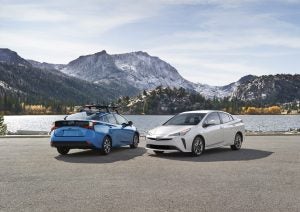
Many are wondering what is a plug in hybrid. Learn what differentiates the Toyota Prius Prime from other hybrid cars and how the Prius Prime’s unique plug in feature lets you enjoy all the perks of electric cars. Learn more about the Prius Prime here: https://www.toyota.com/priusprime/

Passport Toyota explains why oil changes are important and how often you should have the service done to your vehicle

One of the most important things you can do to keep your vehicle healthy and running smoothly is to change its oil. Changing a vehicle’s oil is simple enough to do at home, but if you simply do not have the time to do it yourself, fear not, your friends here at Passport Auto Group are here to help you out. Our trained specialists use parts from each manufacturer and have the experience and knowledge to get your oil change done in a timely fashion so you can get on with your busy day. Many people who bring their vehicles in when they need to change their oil do not think about bringing it to a dealership because they think we charge more than other places. In fact, our prices are very competitive, and we use genuine parts while other service shops may not. We also include many other service features to go along with your oil change to make your vehicle drive like the day you drove it off of our lot. more HOW OFTEN DO I NEED AN OIL CHANGE? You may be under the impression that every car needs an oil change at exactly three months or 3,000 miles. Or maybe you're on the other end of the spectrum and you won't bother until your engine actually stops running. (Spoiler alert: if that has happened, it's too late.) The first example is just a little off. The second is scary! MY, HOW TIMES HAVE CHANGED. The standard 3,000 mile rule comes from an earlier age of vehicle production. With advances in both engine and oil technology, you don't need to stick to such a frequent schedule. Some classic and specialty cars will still want to be on this tighter timetable, but if you're driving a vehicle built in the last decade or so, it probably isn't necessary. It won't hurt the car, but you might just be wasting some good oil if you change it too often. BUT WHY SHOULD I BOTHER TO CHANGE THE OIL IN MY CAR? Oil lubricates your engine and all of its little components. When the oil breaks down, it can't do its job effectively anymore. With all that friction, your engine will overheat, which can cause parts to quickly wear down and warp. If you just never change your oil, your engine is likely to eventually seize up and turn into a big useless pile of scrap metal. SO WHAT SHOULD I DO? Unfortunately, there isn't really an easy rule to remember across the board. Each car is different, and each driver is different. The first thing to do is check your owner's manual. For example, some manufacturers recommend a maximum interval of 12 months or 7,500 miles between oil changes for many of their models. Your next guideline is to make sure you always pay attention to your vehicle's notifications and warning lights- most new vehicles include some very cool technology and it would be a shame to ignore it! You'll want to adjust your own oil change schedule depending on your driving habits and conditions. Extreme temperatures, both hot and cold, can cause your oil to work a little harder. Here are some other factors to consider: • Stop-and-go vs. highway mileage • Mountains and hills vs. flat terrain • Frequency of heavy loads or towing • Frequency of engine idling Don't forget to check our service specials page for any applicable money-savers, and then schedule a service if your car is ready for an oil change. Please feel free to call or stop by to discuss your own vehicle and driving habits - our experienced technicians are here to help you get the most out of your car, and we can help you come up with an oil change schedule you're comfortable with. We know our environment and our brand, so be honest about how aggressive you drive and we'll make sure your car gets the best possible care! CHOOSE YOUR OIL TYPE WITH THE HELP OF OUR EXPERTS Considering the type of oil that you need for your vehicle to continue a successful streak of commuting? There are a number of options that your vehicle may or may not be right for, and it can sometimes be confusing differentiating between the choices that are available. We are here to help! We have a preview of standard motor oil, synthetic blend and full synthetic ready for you to review, and we look forward to your next scheduled oil change here at our service center! STANDARD OIL This is the most common brand of oil that you will discover for your vehicle, and one that most leading brands carry. Usually distinguished by a 5W-20 or 5W-30 branding, this oil is recommended to be changed every couple months or thousands of miles, with a routine maintenance appointment easy to schedule with our factory-trained technicians. FULL SYNTHETIC OIL A full synthetic blend proves to be a more expensive type of oil, but for good reason. This oil type is superior to that of standard oil, and designed to thrive in both colder and hotter climates. Tested for maximum performance and held to stringent standards, this oil is typically required for more technologically advanced engine types. SYNTHETIC BLEND Mixed with an organic blend and full synthetic, this type of motor oil typically is relegated to pickup trucks and specific SUVs. Designed to support heavy transportation loads and extreme climates, you will be confident in the strength and durability of this oil type. Click here to schedule your oil service today

Toyota Shifts Production Plans at Its Alabama Joint Venture Plant

Toyota is shifting future production plans at the Mazda Toyota Manufacturing U.S.A. (MTMUS) joint venture assembly plant as an opportunity to build a new, yet-to-be announced SUV. This shift is in response to changing market demands and a growing consumer appetite for light trucks and SUVs which are achieving record sales, including Toyota’s best-selling RAV4. More details related to the future SUV will be released at a later date. Corolla production continues at Toyota’s Blue Springs, Mississippi, plant. Construction of MTMUS in Huntsville, Alabama, remains on schedule, with the start of production expected to begin in 2021. Up to 4,000 new jobs will be created and hiring is underway. In August 2017, Toyota and Mazda announced a collaboration to establish MTMUS, a $1.6 billion joint venture that will assemble up to 300,000 vehicles annually.

Pure and Natural: The Sound of a Supra

What draws us to a sports car? Perhaps it’s the way that light bends around its contours, or how it feels when you steer into a tight turn. Maybe it’s the distinctive smell of burnt rubber, or the way adrenaline tastes. For most drivers, it’s not one, but all of these things. We’re drawn to the way they ignite our five senses. Toyota’s engineers conceived the new Supra GT as a multisensory experience, but sound was first among equals. Developed with a new, nonnegotiable 3.0-liter inline-six engine, the Supra reconnects drivers to the raw, unadulterated sound and experience that comes with driving a sports car. So, how does one shape the sound of an engine to bring the excitement of a sports car to life? You don’t shape it — you preserve it, according to Toyota Supra Chief Engineer Tetsuya Tada. “When cooking, if the ingredients are good and fresh, you don’t have to add extra ingredients. It already tastes great,” Tada said. “It’s the same concept when it comes to sound engineering.” In other words, let nature do the talking. more An Aural History In the world of auto sports, sound has a sprawling lineage. From the revved-up putter of the Ferrari F1 to the banshee wail of the Lexus LFA, the sound of a car can be as iconic as the chassis or any other component. But it’s more than just aesthetics: Sound matters to the experience of street driving, too. Not surprisingly, today’s cars sound very different from those of the past. Due to emission regulations and tighter tolerances within the engine, manufacturers have had to adjust their process — and rightly so. What ends up being sacrificed, though, is the purity of sound that captivates the driver. Also reining in the roar of contemporary cars are strict government regulations around noise that have made it nearly impossible to run an exhaust all the way through the back of the car. Tada’s task is to work within these limitations, doing his best to preserve a pure sound that ignites the senses. A Process of Preservation Tada’s philosophy is to coax and protect rather than force. That’s why he didn’t set out to create a sound. Instead, he believed that if the initial sound could be unrestricted, the voluptuous vroom that typifies the aural racing experience could issue forth. Tada was adamant about having the inline straight six. With no unnecessary vibrations and no unnecessary noise, the engine provides a “wonderful, piercing sound that just travels forever.” “When that natural sound reaches the driver, that’s when he can really feel the condition of the car. The driver can react to that, which allows him to drive and control the car better,” he said. “That’s what makes it fun.” Fun and classic. In the whisper-quiet era of hybrid and electrified vehicles, Tada believes this may be the last time he can offer up a car with a crisp, raw sound. It is his gift, of sorts, to the enthusiast and the car community. “Being able to create a car like this, I’m hoping that enthusiasts will be able to enjoy it for the next 20, 30 years moving into the future.” On sound that travels forever, the road is open.

New Toyota program waives lease payments and fees for spouses of service members who have suffered a catastrophic injury

In recognition of the sacrifice made by military service members and their families, Toyota Financial Services has introduced a new program that waives the remaining lease payments for military customers who die or are catastrophically injured in the line of duty. Gold Star families are the relatives of U.S. military members who have died while serving their country. Toyota’s program extends to the Gold Star families and goes a step further to include service members who have been catastrophically injured. “We value our customers and recognize the sacrifices these heroes have made to defend our freedoms,” said Anna Sampang, Toyota Financial Services vice president of service operations. “We’re hopeful this new program will help their families as they navigate a difficult time.” The company invites eligible Toyota and Lexus lease customers or their family members to contact Toyota Financial Services or Lexus Financial Services to be assisted. Toyota Financial Services will allow the customer’s estate or family to return the vehicle and will forgive the remaining lease payments and any end of lease fees from their existing lease contract. “Toyota is grateful to the service members who have given so much to protect our country,” said Mark Templin, president and CEO of Toyota Financial Services. “We humbly thank the families of those who have sacrificed their lives or suffered catastrophic injuries to keep the United States safe, and we are honored to do our part to recognize their service.” This program is the latest endeavor in Toyota’s extensive recognition of the men and women who serve in our nation’s armed forces. Since 2012, the company has supported Hiring Our Heroes, a program of the U.S. Chamber of Commerce Foundation that connects veterans, transitioning service members, and military spouses with career opportunities. Toyota also offers military rebates to U.S. military personnel, household members of eligible U.S. military personnel (including Gold Star families), U.S. military retirees, and U.S. military veterans within two years of discharge.

Contact Us

Fill out this form below and we'll contact you shortly
*Required Fields