



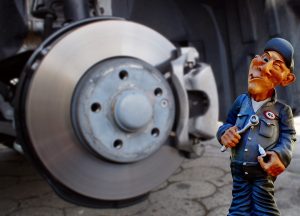
 A Long Island schoolteacher named Irving Gordon has kept his 1966 Volvo in such good shape, that it’s driven more than 3 million miles. A lot of care goes into making a car last a long time, and here are a few things to expect as your car ages. These tips show how to keep your car in top shape, if not for millions of miles, then certainly for longer than average.
First Service
By about 15,000 miles, your new vehicle should be serviced for the first time. A good first service will include inspection of core parts like the brake systems, cooling systems, possibly fuel systems, and include an oil change, air filter replacement, and tire rotation.
A first scheduled service shouldn’t cost you much more than $200, but could help outline small quirks in your vehicle, which you can address easily and preemptively, before they cost you a lot more in the future.
Second Service
At 30,000 miles, it’s time for your second scheduled service. This one is a little more thorough, and should cost $500 at the most. It will cover all the parts previously inspected, and include a new fuel filter. Depending on the quality of your transmission fluid and spark plugs, those might get replaced by this point, but if they’re high quality, you can wait until later.
Third Service
As your third 15,000-mile interval comes (45,000 miles), it’s usually time to have the same treatment that was done at with your first service. Typically, the only difference is that if the transmission fluid wasn’t changed before, it will definitely need it now. You could still wait on the spark plugs, if they’re very well made.
Fourth Service
Just as the third service is about the same as the first, the fourth service, at 60,000 miles, is usually the same as the second, with some important replacements. The shop should replace all the belts, valves, and hoses that are showing age, and the spark plugs will need to be replaced.
100,000-Mile Service
After the 15,000-mile cycle has taken you to about 100,000 miles, you’ll need to take your vehicle in for the most important checkup of it’s lifespan. However, don’t be fooled into spending more money than your other services. While 100,000 miles is a big number, it does not pose a particular threat, because with most vehicles, there are few parts that wouldn’t need attention sometime before 100,000 miles. Get a checkup, which is similar to the other services, and then maybe go on a trip to celebrate your healthy ride.
Remember, every vehicle has its own manufacturer recommended schedule of maintenance, and this only a general outline that may not perfectly represent your vehicle. Read you owner’s manual, online if you have to, and get a firm schedule planned for what to expect in the coming months and years.
Photo by Capri23auto | Licensed under CC0
![[Facebook]](https://www.passporttoyota.com/blogs/716/wp-content/plugins/bookmarkify/facebook.png)
![[LinkedIn]](https://www.passporttoyota.com/blogs/716/wp-content/plugins/bookmarkify/linkedin.png)
![[Twitter]](https://www.passporttoyota.com/blogs/716/wp-content/plugins/bookmarkify/twitter.png)
![[Yahoo!]](https://www.passporttoyota.com/blogs/716/wp-content/plugins/bookmarkify/yahoo.png)
![[Email]](https://www.passporttoyota.com/blogs/716/wp-content/plugins/bookmarkify/email.png)
Connect with us


